

If you’ve been told you need spinal fusion surgery, one of your first questions is probably: “How long until I will be back to normal?” While most patients feel significantly better within three to six months after spinal fusion surgery, complete bone healing can take up to a year or longer. While spinal fusion is one of the main surgical treatments for conditions like degenerative disc disease (wear and tear on spinal discs), spinal instability, and scoliosis, it’s also a major surgery that requires more healing time than motion-preserving alternatives like artificial disc replacement. In this guide, Dr. Todd Lanman shares what you can realistically expect during your recovery journey from your first days in the hospital through your gradual return to normal activities, plus practical strategies to help you heal smarter and get back to the life you want faster.
What Is Spinal Fusion and Why Is Recovery Longer?
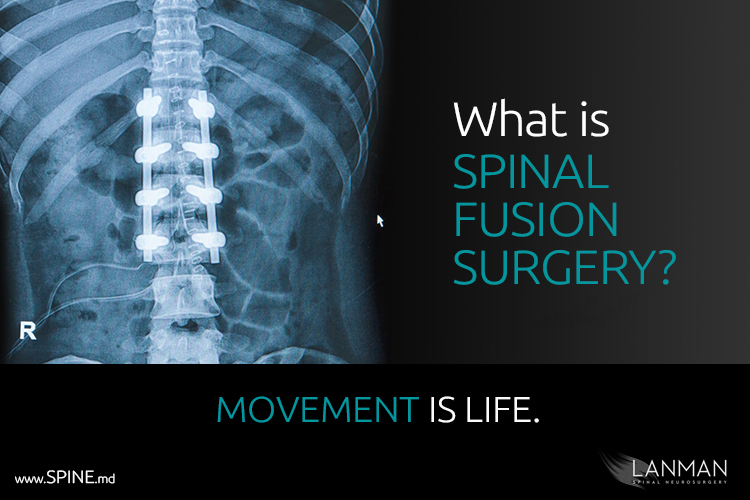
Spinal fusion is a surgical procedure in which a surgeon permanently joins two or more of the bones in your spine (called vertebrae) by placing bone graft material (bone tissue) and often metal hardware such as plates, screws, or rods between them. Think of it like a “welding” process: the bone graft acts as a biological glue that, over time, causes the vertebrae to fuse into one solid bone, much the way a broken bone knits together after a fracture. The metal hardware holds the vertebrae in place while this bone healing occurs. The goal of fusion is to eliminate movement at the treated level of the spine, which stabilizes the spinal column and often relieves pain caused by conditions like degenerative disc disease (wear and tear on spinal discs), spinal instability, or scoliosis (abnormal curvature of the spine).
Recovery from spinal fusion is significantly longer than recovery from motion-preserving alternatives like artificial disc replacement (ADR) because the body must take time to heal. During this extended healing period, patients usually need to wear a supportive brace and face activity restrictions to protect the fusion site as it heals. Additionally, because spinal fusion removes motion at the treated vertebrae, it can place extra stress on the spinal segments directly above and below the fusion, potentially leading to a condition called adjacent segment degeneration (ASD), which is premature/accelerated wear and tear of those neighboring discs. ASD may develop years later and sometimes require additional surgery.
Spinal Fusion Recovery Timeline: Week-by-Week Overview
Immediately After Surgery (Days 1–3):
While some spinal fusion surgeries can be “same day” surgery, you may stay in the hospital up to three days after spinal fusion surgery. During that time, your medical team carefully monitors your healing and manages your pain with medications. While you may feel drowsy and experience some discomfort, this initial pain usually peaks within the first couple of days and is managed effectively with medication.
One of the most important parts of early recovery is movement; patients are encouraged to begin walking short distances with assistance as soon as possible after surgery. Gentle movement promotes circulation and muscle recovery.
While movement is encouraged, it’s important to protect your healing spine. You must strictly avoid bending, twisting, or lifting
Your medical team will teach you safe ways to get in and out of bed, stand up, sit down, and walk to prevent accidental movements that could disrupt the surgical site. Some patients are fitted with a back brace during this initial period to provide mechanical stabilization (support) and limit unwanted spinal movement while the fusion begins to heal.
The Early Phase of Spinal Fusion Recovery (The first 2 weeks at home)
Most patients leave the hospital after 1-3 days following an uncomplicated lumbar spinal fusion, though some may stay longer depending on their individual circumstances and overall health. During this critical early phase, your primary goal is to protect your healing spine while gradually beginning gentle movement. While walking is beneficial, you must strictly adhere to activity restrictions: avoid bending from the waist, twisting your spine, and lifting any objects heavier than about eight to ten pounds. Driving is typically off-limits during this time.
Follow all wound-care instructions provided by Dr. Lanman’s team carefully; keep your surgical incision clean and dry; watch for signs of infection such as increased redness, warmth, or drainage; and attend all scheduled follow-up appointments. Most patients continue taking prescription pain medications during these two weeks, though your medical team will help you transition to milder options as your pain improves. You’ll likely need significant assistance from family members or friends for household tasks, meal preparation, and personal care during this phase.
The Intermediate Phase of Spinal Fusion Recovery (Weeks 2–12):
As you progress into weeks 2 through 12, your recovery shifts from protection to restoration. Between weeks 2 and 6, most patients begin more consistent walking, typically building up to half a mile per day over fifteen to thirty minutes. Dr. Lanman typically recommends that formal physical therapy (PT) begin around 4 to 6 weeks after spinal fusion surgery, once your pain and swelling have improved enough to safely tolerate exercise.
During the intermediate phase, your physical therapy team will emphasize gentle range-of-motion exercises, proper body mechanics, and ways to maintain a neutral spine. Between weeks 6 and 12, your physical therapist will gradually introduce core strengthening exercises targeting your deep abdominal muscles and lower back extensors, which are essential for long-term spinal stability. These exercises progress from low-load activities like ankle pumps and heel slides to more advanced movements like controlled bridges and bird dogs.
Activity restrictions still apply during this period. Avoid heavy lifting (typically anything over ten pounds), significant bending or twisting, and strenuous exercise. Many patients with primarily sedentary jobs can return to work within 6 to 8 weeks if their pain is well-controlled and they follow proper ergonomic precautions. Staying consistent with your home exercise program is just as important as your formal therapy sessions, as this combination drives optimal recovery.
The Consolidation Phase of Spinal Fusion Recovery (Months 3–6):
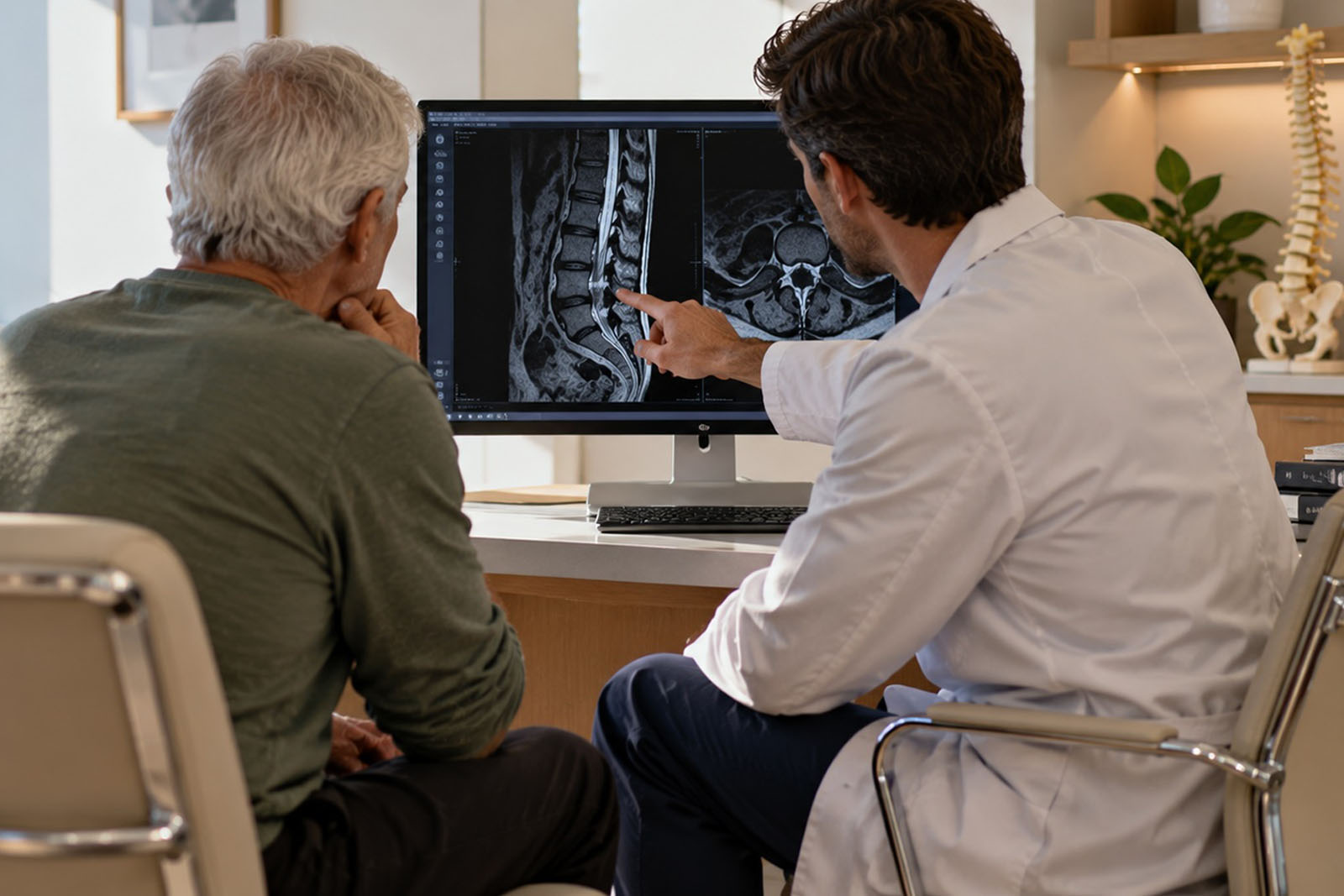
By the 3- to 6-month mark, your bone fusion is continuing to mature internally, and most patients experience a significant reduction in pain compared to earlier recovery phases. Dr. Lanman will likely order imaging (X-rays or sometimes a CT scan) to assess your fusion and confirm that the bone is healing as expected. At this stage, you should feel substantially better during daily activities, and many patients report that they feel ready to return to a more normal lifestyle.
During this phase, continue your physical therapy program with increasing intensity and complexity of exercises. Dr. Lanman will usually approve of more moderate activities like light recreational walking, swimming, or stationary cycling. However, you should still avoid high-impact activities such as running, jumping, or contact sports, as these place excessive stress on your healing fusion. Many patients can return to their full work duties during this period if their jobs don’t involve heavy lifting or repetitive bending.
Your commitment to physical therapy and activity progression during months 3 through 6 is vital for optimal long-term outcomes. Stay in close communication with Dr. Lanman’s team to ensure your activities remain appropriate for your specific fusion level and overall recovery progress.
Month 6–12:
Most patients experience full functional recovery and are cleared to return to nearly all normal activities during this period. At around the 6-month point, Dr. Lanman will likely order imaging (X-rays or CT scans) to confirm that your vertebrae have fused successfully and the bone graft has solidly integrated.
During this phase, you can resume most regular activities—including bending, twisting, and lifting—with clearance from Dr. Lanman. However, you should continue to avoid extreme or high-impact sports such as contact football, boxing, competitive skiing, or heavy powerlifting, as these place excessive stress on your healing fusion site. Light to moderate recreational activities like golf, swimming, hiking, and recreational cycling are typically permitted.
By the 8-9 month mark, many patients report feeling completely recovered and are pain-free for the first time in years.
It’s important to understand that while you may feel fully recovered after a year, your spine will continue to mature and solidify for up to eighteen months following surgery. Continuing core-strengthening exercises and maintaining good posture throughout this extended healing period will optimize your long-term outcomes and help prevent problems at your fusion site and nearby spinal segments. Dr. Lanman will provide personalized guidance on activity progression and any lasting limitations based on your specific fusion level and overall recovery trajectory.
Factors That Affect Recovery Time
Several patient and surgical factors influence how quickly you’ll recover from spinal fusion. Understanding these can help you prepare for your individual recovery timeline and work with Dr. Lanman to optimize your outcomes.
Patient-Related Factors
- Age: Older patients (age 70 and older) may require longer recovery and are more likely to be discharged to rehabilitation or skilled nursing facilities rather than directly home. However, age alone does not prevent successful fusion—many older patients achieve excellent outcomes with appropriate support.
- Smoking: Smoking significantly increases the risk of pseudoarthrosis (also called non-union, when the fused vertebrae fail to solidify together). Smokers have nearly twice the risk of non-union compared to non-smokers, with an unadjusted odds ratio of 1.97 (95% CI 1.55-2.52). Importantly, former smokers who quit at least one year before surgery show similar outcomes to non-smokers, making smoking cessation an important pre-surgery goal. Smokers also have lower rates of returning to work and reduced overall satisfaction with their surgical outcomes.
- Obesity and Body Mass Index (BMI): Higher BMI is an independent risk factor for complications including surgical site infections and other postoperative problems. These complications can extend your recovery timeline.
- Comorbidities (existing medical conditions): Conditions such as diabetes, hypertension, osteoporosis, and chronic pulmonary disease can affect healing and recovery speed. Patients with multiple comorbidities may benefit from specialized enhanced recovery programs coordinated with Dr. Lanman’s team.
- Pre-operative physical fitness: Patients with better pre-operative physical conditioning tend to recover faster and experience better long-term outcomes.
Surgical Factors
- Number of vertebrae fused: Single-level fusions typically have faster recovery than multi-level fusions (fusing three or more levels), which require longer bone healing time and more extensive rehabilitation.
- Type of surgical approach: Minimally invasive surgery (MIS) techniques may allow for faster initial recovery compared to traditional open surgery, though the ultimate fusion success depends more on your individual healing capacity than the technique used.
Working closely with Dr. Lanman before and after surgery can significantly improve your recovery timeline and outcomes.
Risks and Challenges During Fusion Recovery
- Surgical site infection: Surgical site infections occur in approximately 2% to 5% of spinal fusion procedures, with rates varying based on surgical complexity and patient risk factors. Instrumented spinal fusion (fusion with metal hardware) has a pooled average infection rate of 3.8%. Risk factors that increase infection rates include diabetes (which increases infection risk nearly six times), obesity, smoking (which more than doubles infection risk), previous spine surgery (which increases risk nearly four times), and longer operative times. Patients with diabetes, higher BMI, and those undergoing more complex multilevel fusions face elevated infection risk.
- Pseudoarthrosis (failed fusion; non-union): Pseudarthrosis occurs when the bones fail to fuse together properly, with reported rates ranging from 5% to 15% after lumbar fusion surgery. This complication often requires revision surgery to achieve solid fusion. If a surgical site infection develops, the risk of pseudarthrosis increases dramatically to between 30% and 85%.
- Adjacent segment disease (ASD): Adjacent segment disease refers to degeneration (wear and tear) of the spinal discs directly above or below your fusion site, caused by increased stress on those segments. The overall annual incidence of surgery for ASD after lumbar fusion is approximately 2.5%, with a predicted 10-year prevalence of 22.2%. The risk increases with the number of levels fused: single-level fusions have 5- and 10-year ASD surgery rates of 9% and 16%, while three- or four-level fusions have rates of 29% and 40%. Risk factors for ASD include the number of levels fused, younger age at initial surgery, stopping a fusion at L5 rather than extending to S1, and performing a laminectomy (removal of bone) adjacent to the fusion.
- Hardware issues: Hardware-related issues such as screw loosening or breakage can occur, though modern instrumentation has reduced these complications significantly.
- Other complications: Nerve injury, blood clots, and prolonged pain are less common but possible complications after spinal fusion surgery.
- Reduced spinal mobility: Long-term stiffness or loss of mobility may occur, especially if the surgery is in the neck or involves more than one disc.
- Long recovery: Some patients experience emotional fatigue from the prolonged healing process
Can Artificial Disc Replacement Offer a Faster Recovery?
If you’re evaluating surgical options for your spinal condition, you may be a candidate for a motion-preserving alternative called artificial disc replacement (ADR), which can offer significant advantages over traditional spinal fusion. Unlike fusion surgery, which requires bone to solidify over many months, ADR preserves natural movement at the treated spinal segment by replacing your damaged disc with an artificial device designed to mimic the function of a healthy disc. This fundamental difference translates into dramatically faster recovery times: most ADR patients return to light activities within two to four weeks and achieve full functional recovery within six to twelve weeks, compared to the six to twelve months typically required for spinal fusion. Because there’s no need for bone healing or fusion to occur, you can progress through rehabilitation more quickly and return to work and daily activities sooner.
Another major advantage is that ADR significantly reduces your risk of developing adjacent segment disease (ASD). Large studies show that people who have disc replacement surgery are less likely to need additional surgery because of wear and tear on neighboring discs because of adjacent segment disease than those who have spinal fusion. At four to five years after surgery, this difference grows even clearer—with fusion patients needing more follow-up operations over time.
Dr. Lanman is recognized as a national leader in artificial disc replacement surgery and has pioneered advanced ADR techniques throughout his career. He carefully evaluates each patient to determine whether ADR is appropriate based on factors including your age, disc condition, spinal anatomy, and activity goals, and may recommend this motion-preserving option when you meet the criteria for this innovative approach.
Dr. Lanman’s Approach to Post-Op Recovery
Dr. Lanman brings over thirty years of spinal neurosurgery expertise to every patient’s recovery journey, with a deeply personal understanding of spine surgery having undergone eleven spinal procedures himself. This unique perspective informs his patient-centered philosophy, which emphasizes not just successful surgery but optimal long-term outcomes. Each patient is eligible to receive a personalized 4D Health™ plan tailored to their specific fusion type, medical history, activity goals, and lifestyle needs.
Rather than treating recovery as a standardized protocol, Dr. Lanman and his team focus on motion preservation whenever possible, longevity of results, and maximizing your quality of life. He recognizes that every patient’s definition of successful recovery looks different. His practice offers concierge-level support throughout your entire healing journey, from pre-operative preparation through your final follow-up appointments and beyond, ensuring you have access to guidance, reassurance, and expert medical oversight whenever you need it.
Dr. Lanman’s approach places particular emphasis on minimizing complications through meticulous surgical technique, evidence-based protocols, and proactive monitoring, while simultaneously optimizing your functional outcomes so you can return to the activities that matter most to you. For many patients, Dr. Lanman may recommend motion-preserving alternatives to fusion, such as Artificial Disc Replacement when appropriate, reflecting his commitment to choosing the surgical approach that best serves your individual needs and long-term spinal health.
FAQs About Spinal Fusion Recovery
How long before I can drive after spinal fusion?
Most patients can resume driving about four to six weeks after spinal fusion, though timing depends on the type of surgery, spinal level, and recovery progress.
When can I return to work after spinal fusion?
Most patients return to work within six to twelve weeks after spinal fusion, depending on the job’s physical demands and how quickly healing progresses.
Will I have permanent mobility loss after spinal fusion?
Spinal fusion limits motion at the fused segment, so it is possible.
Can spinal fusion fail?
Yes. A spinal fusion can fail if the bone does not heal fully or the hardware loosens, a condition called nonunion or pseudarthrosis. Smoking, poor bone quality, or excessive early motion increase this risk.
What’s the success rate of spinal fusion surgery?
Spinal fusion succeeds in roughly 85 to 95 percent of cases, depending on the spinal level, underlying condition, and surgical technique.
Healing Takes Time—But Expert Care Makes a Difference
Spinal fusion recovery is a journey that can take several months to a year. With the right care, physical therapy, and post-op support, most patients experience significant pain relief and stability. If you’re considering fusion—or looking for alternatives—Dr. Todd Lanman can guide you through your options and design a recovery plan that fits your goals.
Considering spinal fusion or already scheduled for surgery? Contact Dr. Lanman’s office in Beverly Hills for a consultation and expert second opinion. You may be a candidate for a faster-healing, motion-preserving solution like ADR.