

Facet arthropathy is a common source of neck and back pain, but the diagnosis is not always straightforward. The condition refers to degenerative or arthritic changes in the small facet joints that help guide spinal movement and support stability. These changes often appear on X-rays, CT scans, or MRI scans, especially with age, yet many people with facet degeneration have no symptoms at all.
When facet joints do become painful, they may cause localized aching, stiffness, reduced mobility, or pain that worsens with certain movements. Similar symptoms can also arise from discs, nerves, muscles, the sacroiliac joint, or other spinal structures. For that reason, effective treatment begins with a careful evaluation to determine whether the facet joints are actually contributing to the pain.
This article explains how facet arthropathy develops, the symptoms it may cause, how specialists distinguish it from other conditions, and which nonsurgical and surgical treatments may offer relief.
What Is Facet Arthropathy?
Facet arthropathy refers to degenerative or arthritic changes in the facet joints, the small paired joints at the back of the spine. Together with the intervertebral disc, these joints form a three-part motion segment that guides movement, shares mechanical loads, and helps prevent excessive rotation or sliding between vertebrae.
Over time, the cartilage that covers the joint surfaces may thin or break down. The joint may become inflamed, stiff, enlarged, or surrounded by small bone spurs. These changes can limit movement and may contribute to neck or lower back pain.
Facet arthropathy does not always cause symptoms. Many people have visible degeneration on imaging without pain. When the affected joint is believed to be a true source of symptoms, the condition may be described as facet-mediated pain or facet joint syndrome.
Common Symptoms of Facet Arthropathy
Facet arthropathy may cause no symptoms at all. When the affected joints do become painful, symptoms often include:
- A dull or aching pain in the neck or lower back
- Stiffness, especially after rest or prolonged inactivity
- Pain that worsens with leaning backward, twisting, or prolonged standing
- Reduced spinal mobility
- Pain that spreads into the shoulders, shoulder blades, buttocks, hips, or upper thighs
- Headache or pain near the base of the skull when the upper cervical facet joints are involved
Pain that travels farther into an arm or leg, especially when accompanied by numbness, tingling, or weakness, may suggest that another condition, such as nerve compression or spinal stenosis, is also present.
What Causes Facet Joint Degeneration?
Facet joints undergo repeated loading each time the spine bends, twists, or bears weight. Over time, this stress can wear down the cartilage that allows the joint surfaces to move smoothly. Common contributing factors include:
- Age-related wear: Cartilage becomes thinner and less resilient with age.
- Degenerative disc changes: As a spinal disc loses height, the facet joints may carry more load.
- Repetitive spinal stress: Frequent lifting, twisting, extension, or other repeated movements can increase joint strain.
- Previous injury: Trauma may damage a facet joint directly or alter spinal mechanics.
- Spinal instability or abnormal alignment: Conditions such as spondylolisthesis (slippage of one vertebra), scoliosis, or loss of normal curvature can place uneven stress on the joints.
- Previous spine surgery: Some procedures can change how forces pass through nearby spinal segments, although surgery does not inevitably cause facet degeneration.
- Excess body weight: Additional weight can increase mechanical stress on the lumbar spine.
- Anatomic or genetic factors: Joint shape and inherited susceptibility may affect how quickly degeneration develops.
Less commonly, inflammatory arthritis or other joint disorders can affect the facet joints. In many patients, several factors contribute rather than a single identifiable cause.
How Is Facet Arthropathy Diagnosed?
No single symptom, examination finding, or imaging test can prove that a facet joint is the source of pain. Diagnosis usually requires several steps.
Medical History and Physical Examination
Dr. Lanman will ask where the pain begins, where it spreads, what movements worsen it, and whether numbness, tingling, or weakness are present. Pain that increases with leaning backward, twisting, or prolonged standing may raise suspicion for a facet joint problem. However, these findings are not specific, and the examination must also assess for disc disease, nerve compression, spinal stenosis, hip problems, and other possible causes.
Imaging Tests
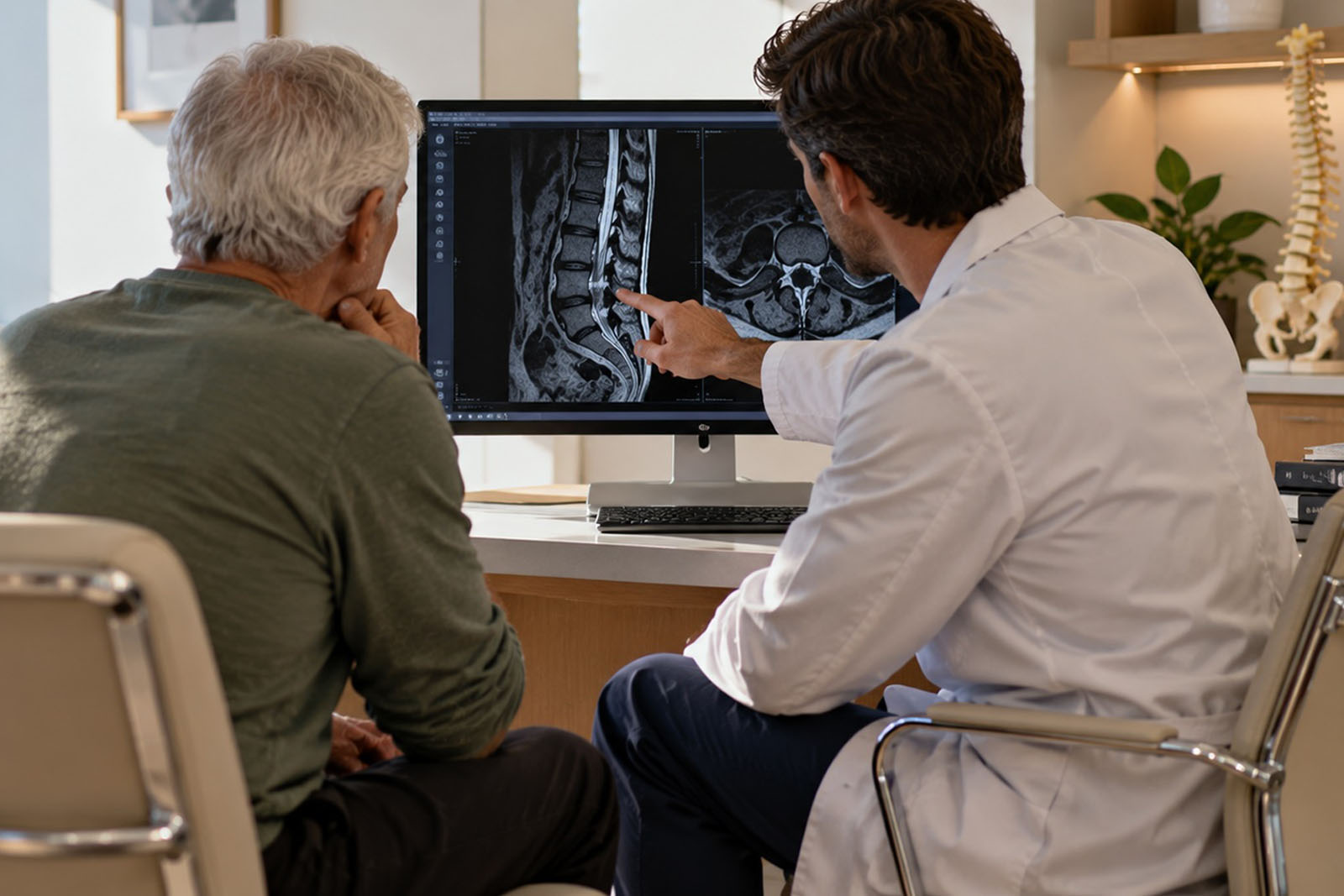
X-rays can show joint narrowing, bone spurs, abnormal alignment, or vertebral slippage. CT scans provide more detailed views of the bones and facet joints, while MRI scans can evaluate the discs, nerves, soft tissues, inflammation, and conditions such as facet cysts.
Facet arthritis on imaging does not automatically mean that the joint is causing pain. Degenerative changes are common, especially with age, and many people with visible facet arthropathy have no symptoms.
Diagnostic Facet or Medial Branch Blocks
When the history, examination, and imaging suggest facet-mediated pain, Dr. Lanman may recommend a diagnostic medial branch block. During this image-guided procedure, a small amount of local anesthetic is placed near the medial branch nerves that carry pain signals from a specific facet joint.
Substantial temporary pain relief provides evidence that the targeted joint may be contributing to the symptoms and may help predict whether radiofrequency ablation could provide benefit. Because false-positive and false-negative responses can occur, the result must be interpreted together with the rest of the evaluation.
Treatment Options for Facet Arthropathy
Treatment depends on whether the facet joints are truly contributing to the pain and whether another spinal condition is also present. Most patients begin with nonsurgical care, while targeted procedures or surgery may be appropriate when symptoms persist or structural problems such as instability or nerve compression are present.
Conservative Care
Initial treatment often focuses on reducing pain while improving strength, mobility, and spinal mechanics. Depending on the patient’s symptoms and overall health, conservative care may include activity modification, physical therapy, core and postural strengthening, heat or ice during symptom flares, and anti-inflammatory or pain medication when appropriate.
These measures cannot reverse established cartilage loss, but they may reduce stress on the affected joints and improve function. Dr. Lanman may also recommend weight management, changes in lifting or work habits, or treatment of an underlying alignment or movement problem.
Facet Joint Injections
A facet joint injection places medication directly into the affected joint under image guidance. The injection may include a local anesthetic, a corticosteroid, or both.
Some patients experience temporary relief, particularly when inflammation contributes to the pain. However, the benefit varies, and facet injections do not repair the arthritic joint. They may also provide additional information about whether the joint contributes to the patient’s symptoms, although diagnostic medial branch blocks are usually more useful before radiofrequency ablation.
Radiofrequency Ablation
Radiofrequency ablation uses controlled heat to interrupt pain signals from the medial branch nerves that supply the affected facet joint. Dr. Lanman may consider this treatment when a diagnostic medial branch block produces substantial temporary pain relief.
The procedure does not remove arthritis or restore damaged cartilage. Instead, it reduces the transmission of pain from the joint. Relief can last for months or longer in well-selected patients, but results vary, and symptoms may return as the treated nerves regenerate.
When Surgery May Be Considered
Surgery is not usually necessary for isolated facet arthropathy. It may become appropriate when severe facet degeneration contributes to spinal instability, spondylolisthesis, spinal stenosis, a synovial facet cyst, nerve compression, or another structural problem.
The type of surgery depends on the underlying condition rather than the presence of arthritis alone. Treatment may involve decompression to relieve pressure on a nerve, removal of a facet cyst, stabilization of an unstable segment, or another procedure selected to address the specific cause of the patient’s symptoms.
When to See a Spine Surgeon
Patients should seek an evaluation with a spine surgeon when neck or back pain:
- Persists despite rest, physical therapy, medication, or other conservative treatment
- Regularly limits walking, work, exercise, sleep, or daily activities
- Travels into an arm or leg
- Occurs with numbness, tingling, weakness, or difficulty walking
- Develops or persists after previous spine surgery
- Has not been clearly explained despite prior evaluation
Seek urgent medical care for progressive weakness, loss of bowel or bladder control, numbness in the groin or saddle area, fever with severe spinal pain, or pain after major trauma. These symptoms may indicate a more serious condition than facet arthropathy.
Schedule an Evaluation With Dr. Todd Lanman
Facet arthropathy can resemble disc-related pain, spinal stenosis, nerve compression, muscle strain, and other causes of neck or back pain. An accurate diagnosis therefore requires more than an imaging finding.
Dr. Todd Lanman performs a detailed evaluation to determine which spinal structures are contributing to the symptoms and whether the most appropriate next step is nonsurgical care, a targeted procedure, or surgery. Schedule a consultation with Dr. Lanman to discuss your symptoms and treatment options.