

The Primary Difference: Bone vs. Soft Tissue
Facet joint syndrome and a herniated disc can both cause back or neck pain, but they usually begin in different parts of the spine. Facet joint syndrome starts in the small paired joints at the back of each spinal level, which work like hinges to help the spine bend, twist, and stay stable. A herniated disc begins in the soft cushion between two vertebrae, and when the disc’s inner material pushes through the outer wall, it can irritate or compress a nearby spinal nerve.
This distinction matters because the pain often has a different source. Facet joint pain is usually mechanical, coming from irritation, arthritis, inflammation, or abnormal loading within the joint itself. A herniated disc is more likely to cause nerve-related pain when displaced disc material affects a nerve root, sending pain, numbness, tingling, or weakness into the arm or leg depending on where the herniation occurs.
In simple terms, facet joint syndrome usually involves the spine’s moving joints, while a herniated disc usually involves the spine’s cushion and nearby nerves. Because symptoms can overlap, Dr. Lanman looks beyond pain location alone to identify the true source before recommending treatment.
Comparing Symptoms: How to Tell the Difference
Facet joint syndrome and a herniated disc can cause similar back or neck pain, but the pattern often differs. Facet joint pain typically worsens when you lean backward, twist, or stand for long periods. It is often centered near the spine and may feel like a deep ache or a sharp catch with certain movements.
A herniated disc more often causes pain with sitting, bending forward, lifting, coughing, or sneezing. When the disc irritates a nearby nerve root, pain may travel into the arm or leg. This nerve-related “radicular” pain can feel sharp, burning, electric, or shooting and, in the lower back, may travel past the knee into the calf or foot. In the neck, it can radiate into the shoulder, arm, hand, or fingers.
Morning stiffness can occur with facet joint arthritis, especially when inflammation builds around the joint overnight. Disc-related pain may feel worse after prolonged sitting or activity that increases pressure on the disc. These patterns provide important clues but do not prove the diagnosis, so Dr. Lanman uses the full clinical picture—symptoms, exam, and imaging—to identify the true source of pain.
Common Causes and The “Domino Effect”
Facet joint syndrome often develops from wear and tear inside the small joints at the back of the spine. Over time, osteoarthritis can break down the smooth cartilage that helps these joints move comfortably. As the joint surfaces become irritated, inflamed, or enlarged, they can cause localized neck or back pain, stiffness, and pain with extension or twisting.
Disc problems can also contribute to facet joint pain. When a disc bulges, herniates, or loses height, the space between vertebrae can narrow and shift more pressure onto the facet joints, forcing them to carry stress they were not designed to handle. This is one reason disc degeneration and facet arthritis often show up together on imaging and in real life.
An acute injury can affect either structure, but the pain pattern may differ. A strained or irritated facet joint may cause localized pain that worsens with movement, while a disc that tears or ruptures, especially after lifting or trauma, may trigger nerve pain that travels into the arm or leg. Identifying which structure failed first helps Dr. Lanman treat the cause of the pain, not just the symptoms.
Diagnostic Accuracy at Lanman Spinal Neurosurgery
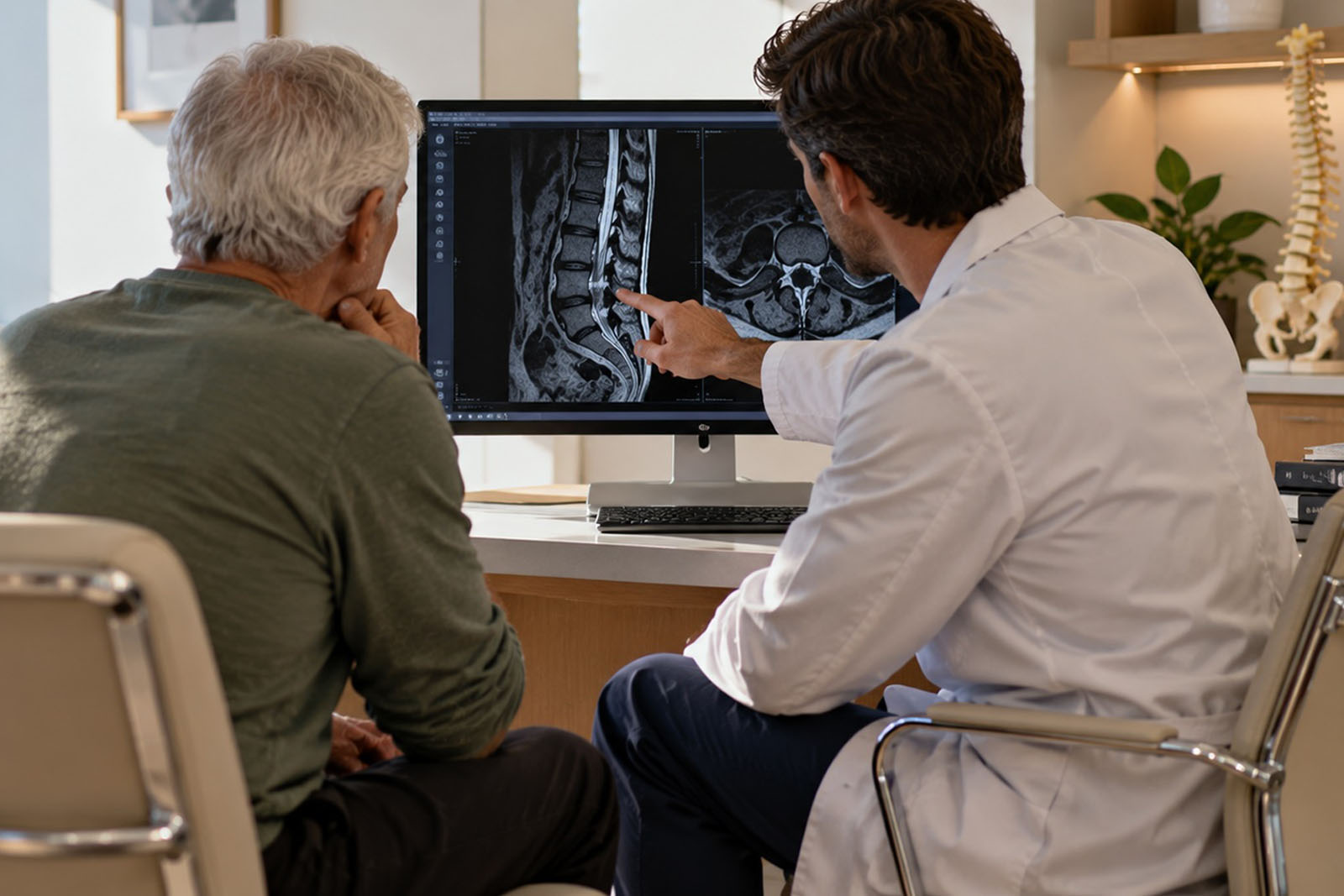
MRI can reveal important details about the spine, but it does not always identify the true source of pain. Many people have disc bulges, facet arthritis, or other degenerative changes on imaging without any symptoms. This is why a diagnosis should never come from the MRI alone.
Dr. Lanman looks for the “pain generator,” meaning the specific structure responsible for a patient’s symptoms. He compares imaging results with the pain pattern, range of motion, neurological function, reflexes, strength, and sensation. Facet joint pain may become more obvious with extension or rotation, while a herniated disc may produce clear signs of nerve irritation in the arm or leg.
When facet joint syndrome remains a concern, diagnostic injections can provide clarity. A medial branch block numbs the small nerves that carry pain signals from the facet joints, and meaningful temporary relief helps confirm that these joints are contributing to the pain. This step can prevent patients from pursuing the wrong treatment and helps Dr. Lanman build a plan based on the actual source of the problem.
Treatment Pathways for Spinal Restoration
Treatment depends on the source of pain. Facet joint syndrome often starts with conservative care designed to improve joint mobility, reduce inflammation, and strengthen the muscles that support the spine. A herniated disc may also improve without surgery, but physical therapy often focuses more on spinal stabilization, posture, and reducing pressure on the irritated nerve.
When symptoms persist, targeted procedures may help. For chronic facet pain, radiofrequency ablation—also called rhizotomy—can quiet the small nerves that carry pain signals from the facet joints. For a herniated disc with nerve inflammation, an epidural steroid injection may reduce swelling around the nerve root and improve radiating arm or leg pain.
Surgery is considered when pain, weakness, nerve compression, or loss of function does not improve with appropriate non-surgical care. For selected herniated discs, microdiscectomy can remove the disc fragment pressing on the nerve. In carefully chosen patients with disc collapse, preserved facet joints, and motion that can still be restored, artificial disc replacement may help restore disc height and maintain movement. For facet-related problems, surgery is usually reserved for cases where enlarged joints, bone spurs, or narrowing compress the spinal canal or nerves. In every case, Dr. Lanman matches treatment to the diagnosis so patients receive the least invasive option capable of addressing the true cause of pain.
Get a Definitive Diagnosis from Dr. Lanman
Treating back or neck pain without knowing its true source can lead to years of trial-and-error care and lingering symptoms. When facet joints and discs can both be involved, an accurate diagnosis is the first step toward real relief.
Dr. Todd Lanman focuses on identifying the specific structure driving your pain—whether that is a facet joint, a herniated disc, or both—and then matching it with the least invasive treatment that can truly address the problem. His goal is to relieve pain, restore function, and protect the long-term health of your spine.
If back or neck pain is limiting your life, consider getting a precise, expert evaluation instead of continuing to guess at the cause. A consultation with Dr. Lanman can give you clear answers and a focused path forward.
FAQs: Facet Joints and Discs
Can you have both facet syndrome and a herniated disc simultaneously?
Yes. Facet joint syndrome and a herniated disc can occur at the same spinal level or in nearby areas. Disc height loss can place extra stress on the facet joints, while a herniated disc may irritate a nerve. An accurate diagnosis determines which problem is actually causing symptoms so you are not treating the wrong source.
Why does my pain get better when I lean forward on a shopping cart?
Pain that improves when you lean forward may suggest spinal stenosis, facet-related irritation, or pressure-sensitive nerve compression. This position slightly opens space in the spinal canal and may reduce stress on irritated joints or nerves. The pattern is helpful, but it does not confirm one diagnosis by itself.
Does facet joint syndrome require surgery?
Usually, no. Most facet joint pain is treated with physical therapy, medication, injections, or radiofrequency ablation. Surgery is generally reserved for cases where enlarged facet joints, bone spurs, spinal narrowing, or instability compress nerves or limit function despite appropriate non-surgical care.