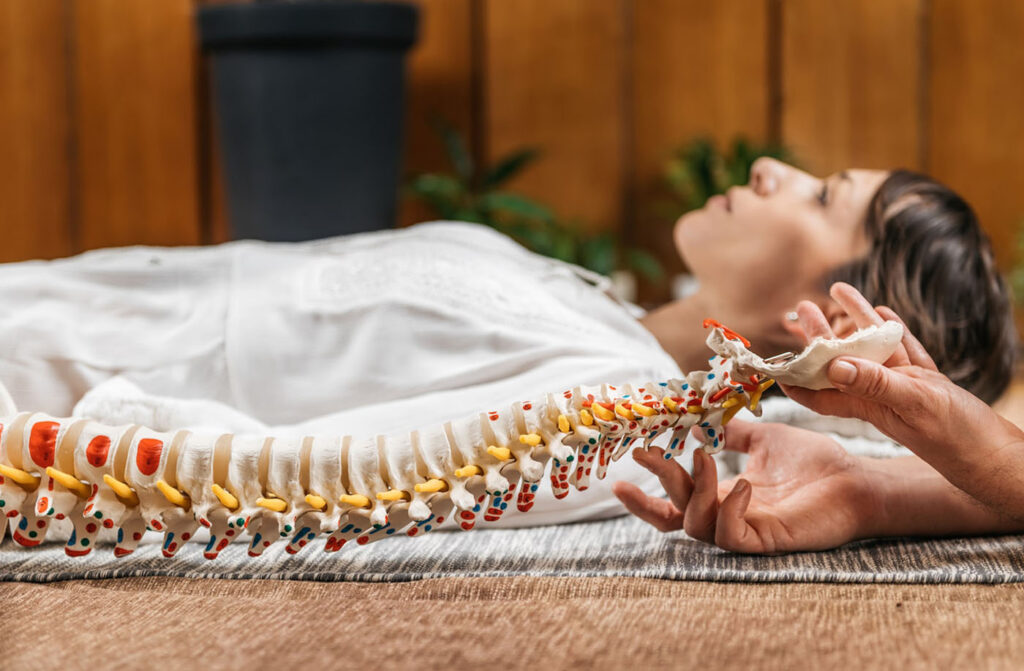


A healthy spine has natural curves that help the body remain balanced, absorb stress, and move efficiently. Flatback syndrome develops when the lower spine loses too much of its normal inward curve, which shifts the body forward and makes it difficult to stand upright without compensation. Patients often describe the feeling that they are constantly fighting their posture, tightening their hips, or bending their knees simply to look straight ahead. In this article, we will explain the symptoms and causes of flatback syndrome, how it is diagnosed, and when treatment may help restore balance, reduce pain, and improve function.
What Is Flatback Syndrome?
Flatback syndrome is a spinal alignment problem in which the lumbar spine, or lower back, loses too much of its normal inward curve. This curve, called lumbar lordosis, helps position the head and upper body over the pelvis. When it becomes too flat, the body’s center of gravity shifts forward, making it harder to stand upright comfortably.
Flatback syndrome affects more than appearance or posture. The imbalance can increase strain on the muscles of the back, hips, and legs and may interfere with standing, walking, endurance, and daily activities. Patients may also experience persistent pain and fatigue because their muscles must work harder to keep the body balanced.
Some patients compensate at first by tilting the pelvis, bending the hips or knees, or extending the neck to keep their eyes level. These adjustments may help temporarily, but they can become tiring and painful, and symptoms often become more difficult to manage as the spinal imbalance progresses.
Common Symptoms of Flatback Syndrome
Symptoms of flatback syndrome often result from the effort required to keep the body upright despite poor spinal alignment. Symptoms often worsen during prolonged standing or walking and may improve with rest or sitting.
Common symptoms include:
- Difficulty standing fully upright
- A forward-leaning posture
- Chronic lower back pain
- Fatigue during standing or walking
- Tightness in the hips or hamstrings
- Neck or upper back discomfort from the effort to keep the head level
- Leg pain, numbness, or weakness if nearby nerves are compressed
- Difficulty walking longer distances without sitting or leaning on an object for support
The severity of these symptoms varies. Some patients notice only mild posture changes at first, while others develop substantial pain, fatigue, and limits on mobility as the imbalance progresses.
What Causes Flatback Syndrome?
Flatback syndrome can develop when the normal curve of the lower spine is reduced by surgery, disease, injury, or age-related changes. Common causes include:
- Prior spinal fusion, especially older procedures that did not preserve the natural curve of the lower back
- Degenerative disc disease, which can cause the discs to lose height and the spine to become flatter
- Compression fractures, particularly in patients with osteoporosis
- Ankylosing spondylitis or another inflammatory condition that changes the shape and flexibility of the spine
- Severe spinal arthritis or age-related degeneration
- Changes in posture or spinal alignment after previous spine surgery
In many patients, flatback syndrome develops gradually. As the discs, bones, or joints change over time, the body may compensate by bending at the hips or knees until pain, fatigue, or difficulty standing upright becomes harder to manage.
How Flatback Syndrome Is Diagnosed
Dr. Lanman evaluates flatback syndrome by looking at how the entire spine supports the body when the patient stands and walks. He reviews the patient’s posture, balance, walking pattern, flexibility, symptoms, and any prior spine operations to identify where alignment has been lost and how the body is compensating.
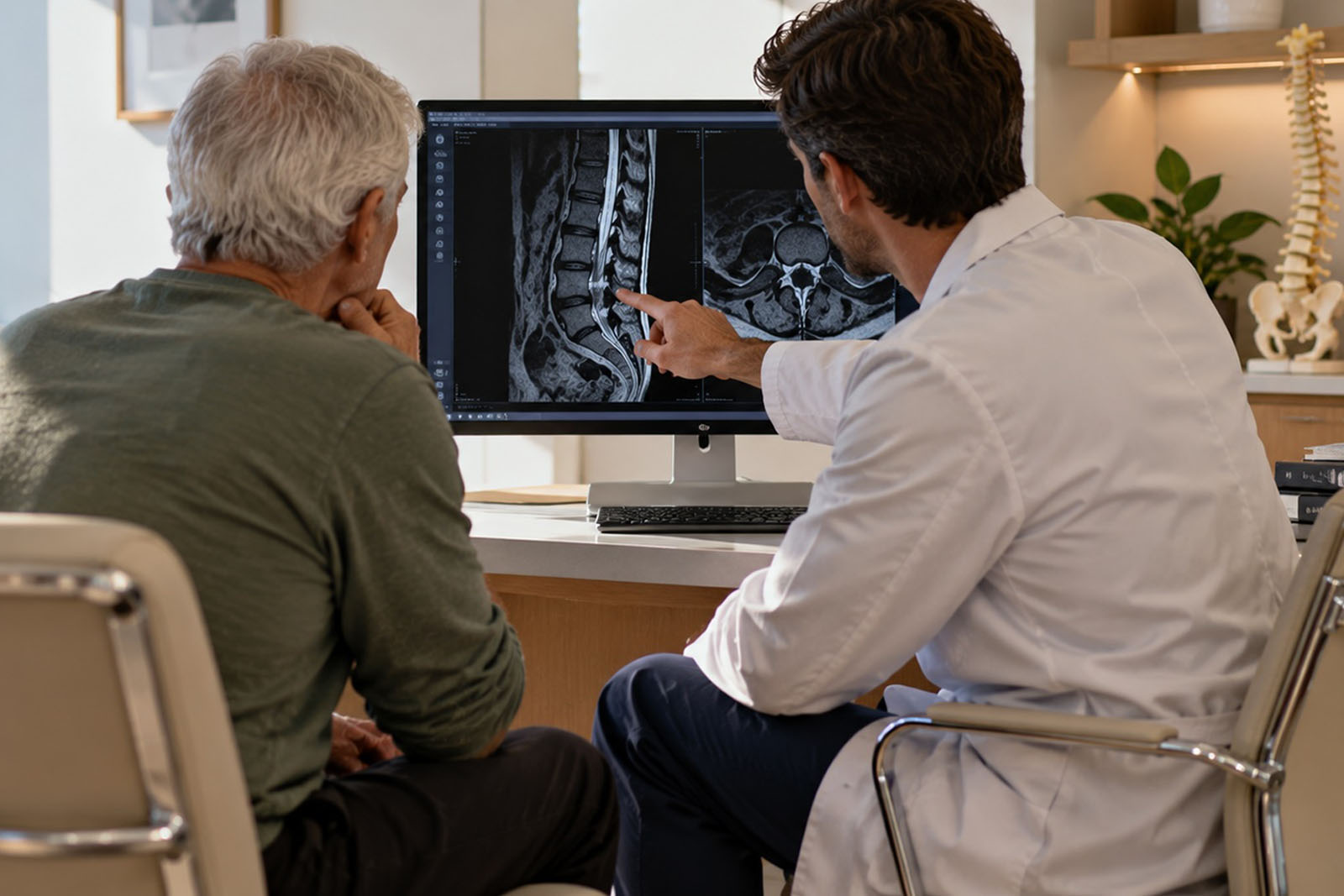
Standing X-rays are central to this evaluation because flatback syndrome may be much more apparent when the spine bears weight. These images allow Dr. Lanman to assess the curve of the lower back, the position of the pelvis, and whether the head and upper body remain balanced over the hips.
Dr. Lanman may also review MRI or CT scans to examine the discs, nerves, bones, and any hardware from previous surgery. By comparing the imaging with the patient’s pain, posture, and functional limits, he can determine whether flatback syndrome is the primary problem and which treatment options are most appropriate.
When Is Flatback Syndrome Serious?
Flatback syndrome should be evaluated when changes in posture begin to interfere with standing, walking, balance, or daily activities. Symptoms that become progressively worse may indicate that the spinal imbalance is increasing or that another problem, such as nerve compression or a fracture, is present.
Warning signs may include:
- A worsening forward stoop
- Increasing pain during standing or walking
- New leg weakness, numbness, or balance problems
- Loss of height or concern for a spinal compression fracture
- New or worsening pain after a previous spinal fusion
Not every patient with flatback syndrome needs surgery. However, an accurate diagnosis can identify the cause of the imbalance, rule out urgent problems, and help determine whether nonsurgical care or a surgical evaluation is appropriate.
Treatment Options for Flatback Syndrome
Treatment depends on the severity of the spinal imbalance, the cause of the condition, and how much it affects pain, posture, walking, and daily function. Options may range from nonsurgical care to complex spinal reconstruction in more advanced cases.
Non-Surgical Treatment
Nonsurgical care may help patients with milder symptoms or those who are not ready for surgery. The goal is to reduce pain, improve posture and movement, and limit strain on the spine.
Treatment may include:
- Physical therapy to improve posture, core strength, hip flexibility, and walking mechanics
- Anti-inflammatory medication or other pain management when appropriate
- Bracing in selected cases
- Treatment for osteoporosis or compression fractures when poor bone health contributes to the condition
- Activity modification to reduce painful strain during standing, walking, or daily tasks
These treatments cannot always restore the lost curve of the lower spine, but they may improve comfort, mobility, and function.
Surgical Treatment
Surgery may be considered when the spine is severely out of alignment, symptoms continue to worsen, or pain and posture problems significantly limit daily life. The recommended approach depends on the cause of the flatback deformity, any prior surgery, the condition of the nerves, and the patient’s overall spinal balance.
Surgical options may include:
- Revision of a prior fusion to restore the natural curve and correct failed or poorly positioned hardware
- Spinal realignment and fusion techniques to rebuild lumbar lordosis
- Decompression when a nerve is compressed, often as part of the larger corrective procedure
- An osteotomy to reshape and realign the spine in more rigid or complex cases
The goal is not simply to make the spine look straighter. Surgery aims to restore a more balanced posture, reduce pain, improve standing and walking, and help the patient function with less effort.
Dr. Todd Lanman’s Approach to Flatback Syndrome
Dr. Lanman begins with a detailed review of the patient’s standing alignment, symptoms, prior operations, and actual imaging studies. This is especially important for patients who have already undergone spinal fusion, because the cause of the imbalance may involve the shape of the fusion, the condition of nearby discs, nerve compression, bone quality, or hardware from an earlier procedure.
No two cases of flatback syndrome are exactly alike. Dr. Lanman considers how the patient stands and walks, where pain or weakness occurs, how much mobility remains, and how the condition affects work, exercise, and daily life. He also evaluates whether the spine is flexible or rigid, since this can influence both the need for surgery and the type of correction that may be possible.
When surgery is appropriate, Dr. Lanman draws on his experience with complex spinal deformity and revision procedures to restore balance while preserving motion wherever the anatomy allows. The treatment plan is designed not only to improve alignment, but also to protect the nerves, account for bone strength, and support long-term mobility.
When to See a Spine Surgeon
Not every patient with flatback syndrome needs surgery, but worsening posture, pain, or loss of function should be evaluated by a spine specialist. A surgical consultation is especially important when the forward imbalance begins to interfere with standing, walking, balance, endurance, or overall quality of life.
An evaluation can clarify whether the symptoms result from spinal alignment, nerve compression, a prior fusion, or another problem and whether continued nonsurgical care or corrective surgery is the most appropriate next step.
Talk With Dr. Todd Lanman About Flatback Syndrome
Flatback syndrome can make standing, walking, and even maintaining an upright posture feel like constant work. When these changes begin to limit daily life, the next step is not simply to treat the pain, but to understand why the spine has lost balance and whether the problem can be corrected.
Dr. Todd Lanman can review your standing alignment, MRI and X-ray images, symptoms, bone health, and any prior spine surgery to determine what is driving the deformity. Schedule a consultation to learn whether nonsurgical care, revision surgery, or another advanced treatment may help restore balance, reduce strain, and improve long-term mobility.