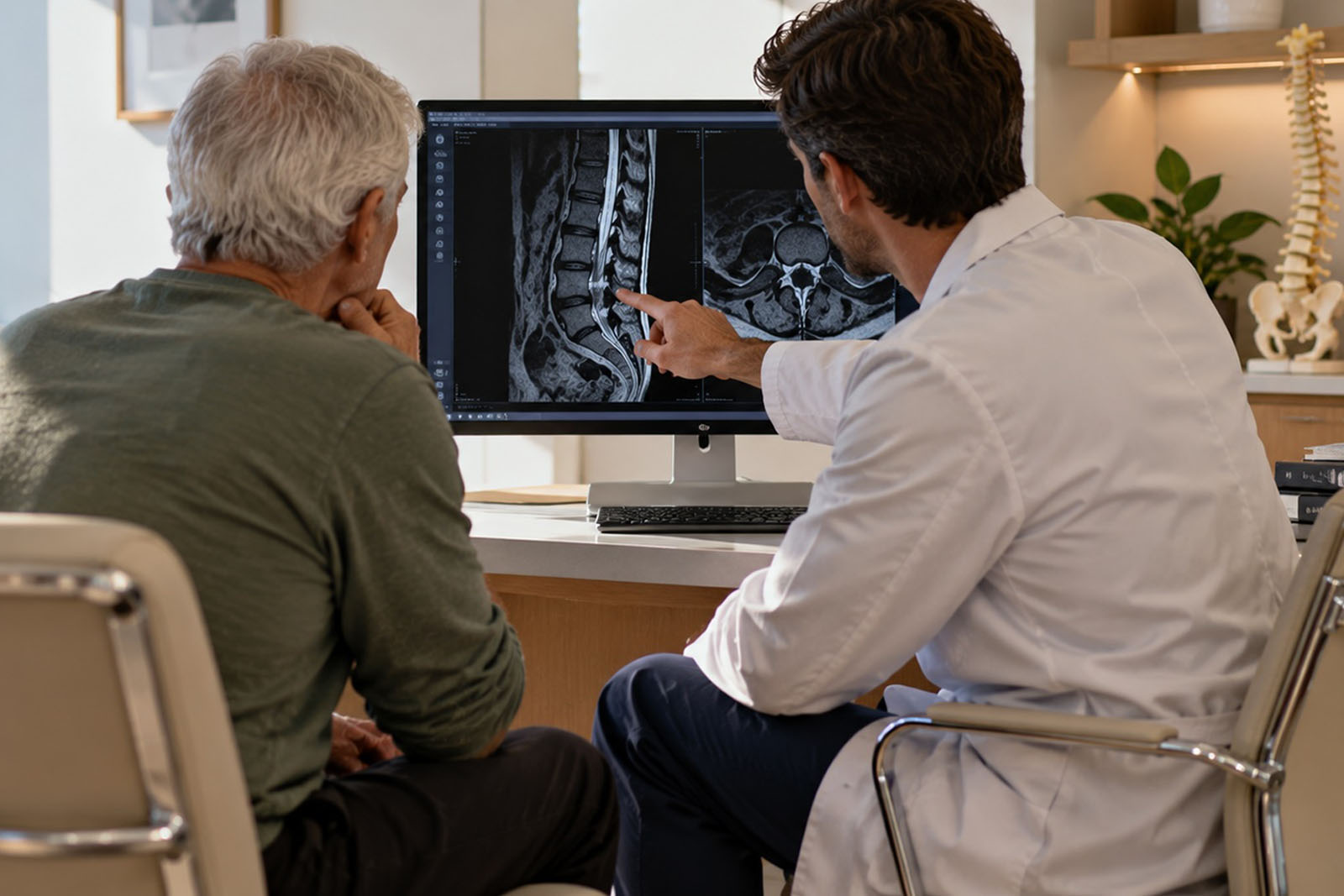


Herniated discs are a common cause of back and leg pain, affecting millions of adults each year. While most cases improve with conservative treatment, some individuals continue to experience debilitating symptoms that interfere with daily life. In these situations, surgery may offer a path to lasting relief. For appropriately selected patients, herniated disc surgery can provide significant and durable improvement in pain, mobility, and overall function. Advances in surgical techniques have further improved long-term outcomes and reduced recovery times.
Dr. Todd Lanman, a nationally recognized leader in spine surgery and motion preservation, has helped redefine what patients can expect from herniated disc treatment. His expertise in advanced techniques such as Artificial Disc Replacement has made him a trusted resource for individuals seeking not only symptom relief, but also long-term spinal health.
What Is a Herniated Disc and When Is Surgery Recommended?
A herniated disc occurs when the soft inner material of a spinal disc pushes through its outer layer, often compressing nearby spinal nerves. This can cause back or neck pain, radiating leg or arm pain, numbness, tingling, or muscle weakness, depending on the location of the herniation. Most patients improve with conservative treatments such as physical therapy, anti-inflammatory medications, and epidural steroid injections. However, surgery may be recommended if symptoms persist despite several weeks of non-surgical care, or if there is severe nerve compression causing progressive weakness, impaired mobility, or loss of bladder or bowel control.
Types of Herniated Disc Surgeries
Microdiscectomy
Microdiscectomy is a minimally invasive procedure used to treat herniated discs in the lower back that are pressing on spinal nerves. Through a small incision and often using a microscope for enhanced accuracy, the spine surgeon removes the portion of the disc causing nerve compression. This technique minimizes damage to surrounding tissues, promotes faster recovery, and is highly effective in relieving leg pain from nerve root irritation.
Microdiscectomy is the most commonly performed surgery for lumbar disc herniation, offering a high success rate with relatively low risk. Because it is minimally invasive, most patients enjoy significant symptom relief but also shorter recovery times, and a faster return to daily activities compared to open spine surgery.
Discectomy and Laminectomy
Discectomy and laminectomy are more extensive surgical procedures typically reserved for complex or recurrent cases of herniated disc. A discectomy involves removing part or all of the herniated disc to relieve pressure on the spinal nerves. In a laminectomy, the surgeon removes part of the vertebral bone (the lamina) to create more space in the spinal canal and reduce nerve compression.
These procedures may be performed together, especially when the disc herniation is large, involves spinal stenosis (narrowing of the spinal canal), or affects multiple levels. While recovery may take longer than with microdiscectomy, these surgeries can offer significant relief in cases where less invasive options are not sufficient.
Artificial Disc Replacement (ADR)
Artificial Disc Replacement (ADR) is a surgical procedure in which a damaged spinal disc is removed and replaced with an artificial disc designed to replicate the structure and function of a healthy disc. The goal is to relieve nerve compression while preserving normal motion at the treated spinal level. The artificial disc allows for continued flexion, extension, and rotation of the spine, which helps maintain overall spine mobility and alignment.
ADR is typically recommended for carefully selected patients who have not responded to conservative treatment but do not have significant spinal instability or severe arthritis. Because the procedure requires specialized training and experience, it is often performed by surgeons with advanced expertise in motion-preserving technologies, such as Dr. Todd Lanman, who has been a pioneer in the field. For eligible patients, ADR offers the potential for faster recovery, improved mobility, and long-term symptom relief.
Spinal Fusion
Spinal fusion is sometimes used to treat a herniated disc, but typically only in select cases. It is more commonly reserved for situations where there is spinal instability, recurrent disc herniation, or coexisting conditions such as degenerative disc disease, spondylolisthesis (vertebral slippage), or spinal deformity.
In spinal fusion, the damaged disc is removed, and the adjacent vertebrae are permanently joined using bone grafts and hardware such as screws or rods. This eliminates motion at the treated segment, which can help reduce pain but also alters the biomechanics of the spine. Because it limits flexibility and carries a risk of adjacent segment degeneration over time, fusion is generally considered only when other surgical options like microdiscectomy or artificial disc replacement are not suitable. Recovery after spinal fusion is much longer than in other herniated disc treatments.
Success Rates of Herniated Disc Surgery
Defining Success in Herniated Disc Surgery
Success in herniated disc surgery is typically measured by three key outcomes: significant pain relief, improved physical function, and a return to normal daily activities. For most patients, a successful procedure means resolution or substantial reduction of leg or arm pain caused by nerve compression, along with increased mobility, strength, and overall quality of life.
Success Rates for Herniated Disc Procedures
Studies show microdiscectomy is often very effective for easing leg pain from sciatica (pain that shoots down the leg due to nerve irritation). One study found that 93.9% of patients had a successful outcome (meaning significant relief from symptoms, including leg pain) at 6 months after surgery, though this dropped slightly to 84.1% at around 30 months follow-up, showing good but not perfect long-term results. A different analysis showed an 89% success rate for transforaminal endoscopic surgery based on improvements in pain scales after 6 months, specifically for leg pain.
A review of data from 39,048 patients who underwent lumbar disc surgery for herniation found that 78.9% reported good or excellent outcomes at an average follow-up of 6.1 years. Microdiscectomy, performed in 3,400 patients, showed a slightly higher success rate of 84.3% at 4.1 years. Endoscopic microdiscectomy, though less common (1,101 patients), had a 79.5% success rate at 2.9 years. The traditional open discectomy, used in 34,547 patients, yielded a 78.3% success rate with a longer follow-up of 6.3 years.
In both ADR and spinal fusion, all the spinal disc is removed so it can no longer be a source of pain or other symptoms. Both ADR and spinal fusion have very high success rates, at or above 90%. ADR outperforms spinal fusion in terms of reoperation rates for patients with cervical spondylotic myelopathy, which includes disc herniation.
Factors That Influence Success Rates
Patient-Specific Factors
Age: Younger patients (e.g., under 40) show a higher likelihood of short-term symptom relief and functional recovery after microdiscectomy. Some studies report a trend toward higher reoperation rates in older adults, but not all research finds age to be a consistent predictor of long-term recurrence or failure.
Lifestyle
- Smoking: Smoking can interfere with your body’s ability to heal. Current studies do not consistently show a significant effect on reoperation rates, however.
- Alcohol: Alcohol use has been linked to higher reoperation rates.
- Physical activity: Most studies find no clear association between physical activity levels, occupation, or employment status and risk of reoperation or recurrence. However, prolonged sick leave before surgery predicts poorer outcomes, emphasizing the importance of early return to activity when possible.
Overall Health
- Comorbidities: The presence of chronic diseases (e.g., diabetes, cardiovascular disease) may interfere with healing and recovery, especially if they are poorly controlled.
- Body mass index (BMI): Higher BMI (overweight/obesity) is linked to increased risk of recurrence and poorer outcomes in some studies.
Severity and Duration of Symptoms
- Preoperative pain and disability: Patients with higher baseline pain (Visual Analog Scale, VAS) and disability (Oswestry Disability Index, ODI) scores often achieve greater absolute improvements after surgery, though their starting point is worse. Severe symptoms may indicate more advanced pathology, which can affect outcomes.
- Duration of symptoms: Longer preoperative symptom duration—especially prolonged disability and time off work—is strongly associated with poorer outcomes, including lower return-to-work rates and persistent disability.11 Early intervention may improve results.
- Type/extent of herniation: Prolapsed or sequestrated discs, higher degenerative grade, and foraminal/extraforaminal location may increase surgical difficulty and reduce success rates, especially in endoscopic approaches.
- Neurological deficits: Severity of preoperative leg weakness or paralysis is a risk factor for prolonged postoperative neurological deficits.
Surgical Technique & Expertise
The success of herniated disc surgery—particularly motion-preserving procedures like Artificial Disc Replacement (ADR)—depends heavily on the surgeon’s skill and experience. Precise technique is essential not only for relieving nerve compression but also for preserving or restoring spinal biomechanics. Choosing a specialist with advanced training in motion-preserving spine surgery significantly improves the likelihood of long-term symptom relief and functional recovery.
Dr. Todd Lanman is a nationally recognized leader in ADR and minimally invasive spinal procedures. With decades of experience and a focus on innovation, he has helped refine techniques that minimize tissue disruption, reduce recovery time, and optimize spinal mobility. His meticulous approach and personalized surgical planning make him a trusted expert for patients seeking cutting-edge solutions for herniated disc treatment.
Post-Operative Care and Compliance
Post-operative care plays a critical role in determining the success and speed of recovery after herniated disc surgery. Not adhering to post-op instructions can delay recovery or lead to recurrent symptoms, especially in the early healing phase. Patients who actively participate in their rehabilitation and follow medical advice are more likely to experience sustained pain relief, regain full function, and avoid the need for additional procedures. Physical therapy supports gradual reconditioning of spinal muscles, improves flexibility, and reduces the risk of reinjury.
Risks and Complications to Be Aware Of
While herniated disc surgery is generally safe and effective, it is important to understand the potential risks. One of the most common complications is recurrent disc herniation, which occurs in approximately 5–15% of lumbar cases, particularly after limited discectomy procedures that leave some disc material in place.
Nerve injury is rare but remains a serious concern, especially in surgeries involving significant scarring or distorted anatomy. Complications such as infection, bleeding, or dural tears may also occur, though these are uncommon with modern minimally invasive techniques. In cases involving spinal fusion, patients face additional risks related to hardware failure or non-union (failure of the bones to fuse properly).
A longer-term concern, particularly after spinal fusion, is adjacent segment disease—degeneration of the spinal levels above or below the fused segment due to altered biomechanics. This risk is one reason why motion-preserving procedures like Artificial Disc Replacement are considered advantageous for eligible patients.
Herniated Disc Surgery vs. Artificial Disc Replacement
Artificial Disc Replacement is a specialized form of herniated disc surgery intended to treat symptoms caused by disc herniation while simultaneously preserving spinal motion. Traditional herniated disc surgeries, such as microdiscectomy or discectomy with spinal fusion, focus on removing disc material and stabilizing the spine. In contrast, ADR not only relieves nerve compression by removing the damaged disc but also replaces it with an artificial implant that maintains natural movement at the spinal level.
One of the key advantages of Artificial Disc Replacement (ADR) is its potential to provide permanent relief from disc herniation symptoms. By fully removing the damaged disc and replacing it with a durable, motion-preserving implant, ADR eliminates the source of nerve compression while maintaining normal spinal biomechanics. In contrast, procedures like microdiscectomy or discectomy with or without laminectomy remove only the herniated portion of the disc and leave the remaining disc material in place. While effective in many cases, these more conservative surgeries carry a risk of recurrent herniation at the same level, sometimes requiring revision surgery. ADR reduces this risk by addressing the entire disc space and restoring both function and alignment, making it a more definitive solution for appropriately selected patients.
ADR may offer superior outcomes for select patients with cervical or lumbar disc herniations. By preserving mobility, it helps maintain normal spine mechanics and reduces the likelihood of adjacent segment degeneration—a common complication of motion-limiting surgeries. Additionally, modern artificial discs are engineered for long-term durability and have demonstrated excellent safety and effectiveness in clinical studies.
Dr. Todd Lanman has been a leader in advancing ADR techniques, particularly in the cervical spine. His extensive experience and commitment to motion preservation have helped establish ADR as a viable, often preferable, alternative for patients who meet specific anatomical and clinical criteria. For eligible individuals, ADR represents a next-generation solution that not only alleviates pain but also supports long-term spinal health.
Dr. Lanman’s Approach to Motion Preservation and Success
Dr. Todd Lanman brings decades of experience in diagnosing and treating herniated discs, with a strong focus on surgical innovation and motion preservation. As a board-certified spinal neurosurgeon and recognized leader in spinal restoration, he has played a pivotal role in advancing the use of Artificial Disc Replacement, particularly in complex cervical and lumbar cases. His expertise extends beyond standard procedures, allowing him to tailor surgical strategies to each patient’s unique spinal anatomy and lifestyle needs.
Central to Dr. Lanman’s philosophy is his proprietary 4D Health™ methodology, which emphasizes long-term spinal health through proactive diagnostics, motion-preserving interventions, and continuous post-surgical care. This approach integrates surgical excellence with wellness planning, helping patients maintain strength, flexibility, and function well into the future. Dr. Lanman’s personal commitment to each patient’s recovery is evident in his detailed preoperative evaluations, individualized treatment plans, and long-standing dedication to restoring quality of life through mobility.
FAQs About Herniated Disc Surgery Success
What is the recovery time after herniated disc surgery?
Recovery times vary by procedure:
- Microdiscectomy: Most patients return to light activity within 2 to 4 weeks. Full recovery and return to unrestricted activity may take 6 to 12 weeks.
- Discectomy with laminectomy: Recovery typically takes 4 to 6 weeks for basic function, with full recovery around 2 to 3 months.
- Artificial Disc Replacement (ADR): Light activity is often resumed within 2 to 4 weeks, with most patients returning to full activity by 6 to 12 weeks.
- Spinal Fusion: This has the longest recovery. Light activity may begin in 6 to 8 weeks, but full fusion and return to normal activity often take 6 to 12 months
How soon will I feel relief after surgery?
Many patients experience significant pain relief within days, especially with microdiscectomy or ADR. Full nerve recovery may take several weeks to months.
What’s the chance my symptoms return?
Recurrent disc herniation occurs in up to 10–15% of cases after discectomy. ADR has a lower recurrence risk due to complete disc removal and implant placement.
Can a herniated disc heal without surgery?
Yes. Most herniated discs improve with conservative care such as physical therapy, medications, and injections over 6 to 12 weeks.
Is artificial disc replacement better than fusion?
For eligible patients, ADR offers similar pain relief with preserved motion, faster recovery, and lower risk of adjacent segment disease compared to fusion.
Get Expert Care for Long-Term Relief
Surgery for a herniated disc can be life-changing when performed by an expert. With a focus on restoring function and motion, Dr. Todd Lanman helps patients regain an active, pain-free life. Whether you’re a candidate for microdiscectomy or artificial disc replacement, our goal is your lasting recovery.
Ready to reclaim your life from herniated disc pain? Contact Dr. Todd Lanman’s Beverly Hills office to schedule a consultation and discover if you’re a candidate for advanced surgical care with industry-leading success rates.