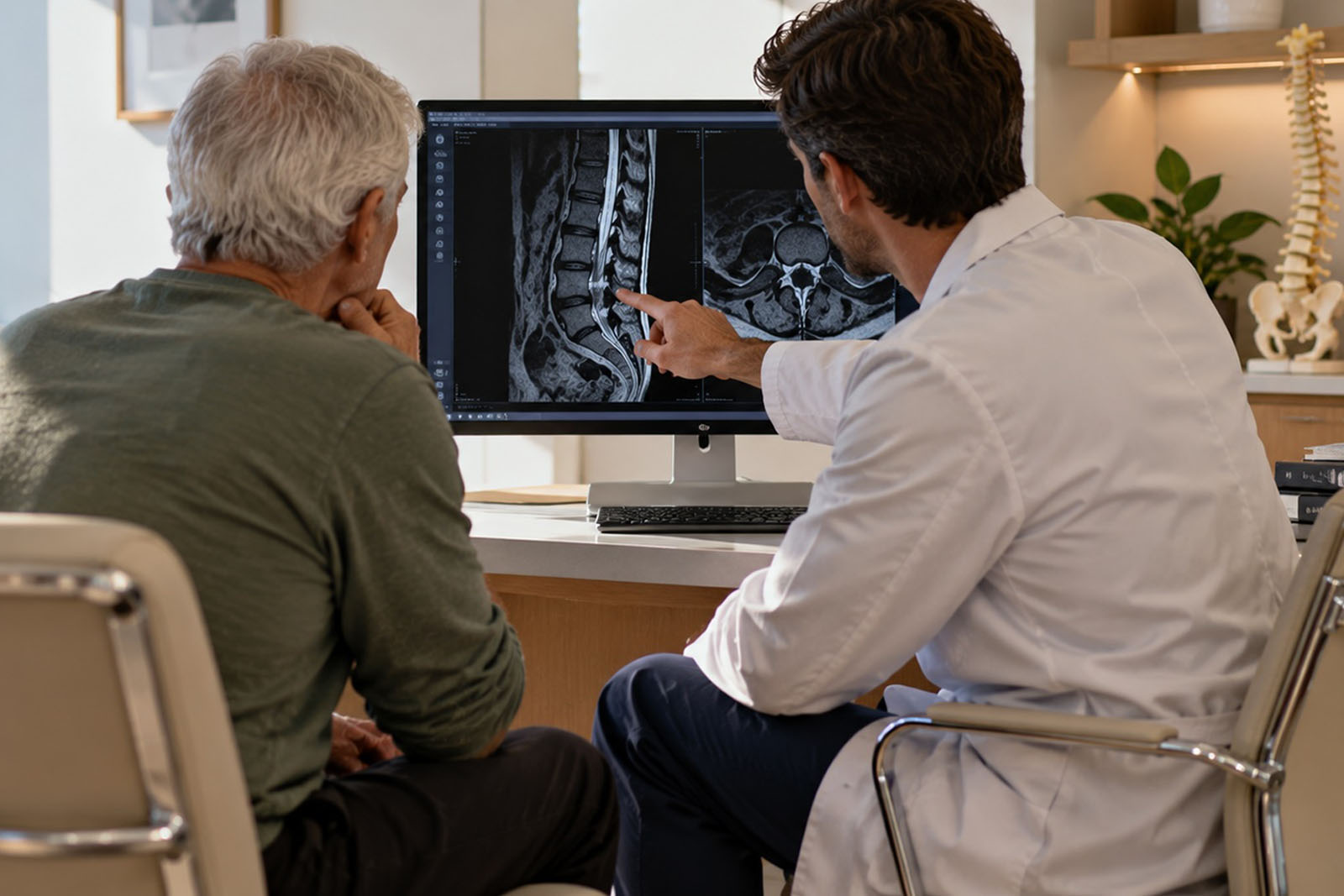


Spinal fusion surgery can be an effective treatment for severe spinal instability, deformity, or degeneration. The procedure works by permanently fusing two or more vertebrae, preventing painful motion at that segment of the spine.
However, spinal fusion is a significant structural change for the body. The spine must adapt to the newly stabilized segment, surrounding tissues must heal, and nerves that were previously compressed may take time to recover.
For many patients, recovery isn’t perfectly linear. Even after a successful procedure, certain symptoms or temporary issues may arise during the healing process.
Understanding the most common post-fusion challenges can help patients recognize what is normal, what can be managed, and when it may be time to consult their surgeon.
Problem 1: Nerve “Waking Up” (Neuropathic Pain)
One of the most surprising symptoms patients experience after spinal fusion is temporary nerve irritation.
When a nerve has been compressed for months or even years, relieving that pressure during surgery doesn’t immediately restore normal function. As the nerve begins to recover, it may send unusual signals.
Patients may experience:
- Tingling sensations
- Burning or electric-shock feelings typically worse at night
- Intermittent nerve pain in the arms or legs
- Sensitivity along the affected nerve pathway
These sensations can actually feel stronger immediately after surgery, even though the underlying problem has been corrected.
This phenomenon is sometimes referred to as the nerve “waking up.”
Management often includes:
- Nerve-calming medications
- Gradual physical activity
- Patience while the nerve heals
Nerve recovery can take 6–12 months, depending on how long the nerve was compressed before surgery.
Problem 2: Adjacent Segment Disease (ASD)
One of the long-term considerations after spinal fusion is a condition called adjacent segment disease (ASD).
When one spinal segment is fused and no longer moves, the vertebrae above and below that level may experience increased mechanical stress.
Over time, this extra workload can accelerate wear and tear in nearby discs or joints.
Patients with adjacent segment disease may experience:
- New back or neck pain
- Degeneration in discs near the fusion
- Reduced mobility in surrounding segments
While ASD doesn’t occur in every patient, it is a known risk associated with fusion surgery.
Prevention strategies often include:
- Strengthening core muscles
- Maintaining healthy posture
- Avoiding excessive spinal strain
Strong core muscles help distribute forces evenly across the spine, reducing stress on nearby segments.
Problem 3: Muscle Atrophy and Stiffness
After spinal fusion, patients often notice that their back muscles feel tight, weak, or stiff.
This happens because early recovery requires restricted movement to allow the bones to fuse properly. During this period, muscles that support the spine may temporarily lose strength.
Patients frequently describe their back muscles as feeling like:
- Tight bands
- Frozen or rigid
- Weak when returning to activity
Walking is one of the most important early exercises during recovery. Gentle, consistent walking helps:
- Improve circulation
- Reduce stiffness
- Maintain muscle engagement
As healing progresses, physical therapy helps rebuild muscle strength and restore mobility.
Problem 4: The Challenge of Non-Union (Pseudoarthrosis)
A successful spinal fusion depends on the bone actually fusing together. In some cases, the vertebrae fail to form a solid connection, a condition called pseudoarthrosis (non-union).
If fusion does not occur properly, patients may continue to experience pain or instability.
Risk factors for non-union include:
- Smoking or nicotine exposure
- Poor nutrition
- Diabetes or other metabolic conditions
- Returning to strenuous activity too soon
Surgeons monitor fusion progress through X-rays or CT scans during follow-up visits.
Patients who want to understand more about long-term recovery considerations can read more about permanent restrictions after spinal fusion.
Problem 5: Hardware Sensitivity or Irritation
Spinal fusion often uses metal screws, rods, or plates to stabilize the spine while the bones fuse together. Most patients never notice this hardware once healing is complete. However, some individuals report temporary awareness of the hardware during recovery.
Symptoms may include:
- Sensitivity near the surgical site
- A “pressure” feeling in the back
- Awareness of hardware when leaning or twisting
In rare cases, the hardware may irritate nearby soft tissue or become palpable in patients with less muscle or body fat. Hardware removal is rarely required, but in select cases, surgeons may consider it after the fusion has become solid and the bones have fully healed together.
Problem 6: Post-Operative “Belly” (Digestive Sluggishness)
Another common issue after spinal fusion is a temporary slowdown in digestion.
Anesthesia and certain pain medications can slow the digestive system. In some patients, this leads to a short-term condition known as postoperative ileus, in which the intestines temporarily stop moving normally.
Symptoms may include:
- Abdominal bloating
- Constipation
- Discomfort or lack of appetite
Fortunately, this issue usually resolves within the first week after surgery.
Patients can often improve symptoms by:
- Drinking plenty of fluids
- Increasing dietary fiber
- Walking as soon as medically cleared
Movement helps stimulate the digestive system and speed recovery.
When to Call Your Surgeon
While many symptoms during recovery are normal, certain warning signs should never be ignored. Contact your surgeon immediately if you experience:
- Sudden loss of bowel or bladder control
- High fever or chills
- Severe worsening pain
- Drainage or redness around the incision site
- New weakness in the arms or legs
These symptoms may indicate a complication that requires prompt medical evaluation.
Get an Expert Opinion
Recovering from spinal fusion can involve ups and downs. Temporary symptoms like nerve irritation, stiffness, or digestive changes are often part of the normal healing process.
However, understanding the difference between normal recovery symptoms and potential complications is critical. If your pain is worsening, new symptoms appear, or you have concerns about your recovery, it’s important to consult an experienced spine specialist.
Request a consultation with Dr. Todd H. Lanman, leading spinal neurosurgeon with more than 30 years of experience helping patients navigate complex spinal conditions and explore treatment options designed to restore mobility and reduce pain.